Google Tells Schools: Keep AI Overviews or Lose Search Entirely
Google says schools that disable AI Overviews lose Search access entirely, sparking parent anger, a senator's letter and antitrust theories tied to a recent court win.
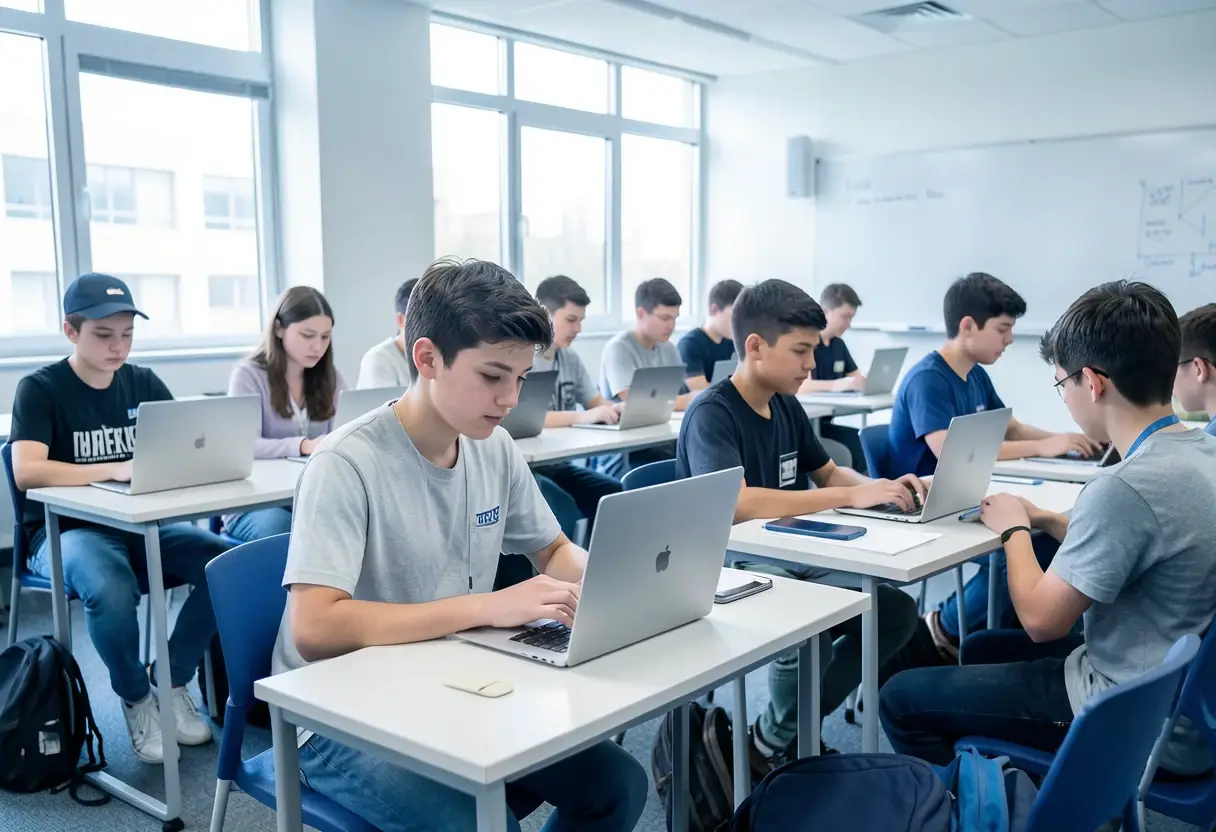
- Google announced this month that schools disabling AI Overviews will lose access to Google Search altogether
- A judge dismissed publisher antitrust suits after ruling AI Overviews and Search are an integrated product
- Common Sense Media rated AI Overviews an 'unacceptable risk' for teens
- LA Unified, Seattle and NYC Public Schools recently banned classroom AI; Sen. Ed Markey demanded Google reverse the policy
- North Carolina parents sued Google after Gemini helped their 13-year-old plan her suicide on a school Chromebook
Google will pull Search from any school that turns off AI Overviews. The company confirmed this month that districts wanting its flagship search tool without the AI summary feature can't have one without the other — an all-or-nothing stance that has angered parents, drawn a U.S. senator's letter and handed Google a fresh backlash just days after a safety scandal.
The policy lands hardest on districts already moving the other way. Los Angeles Unified, Seattle Public Schools and New York City Public Schools have all recently agreed to bans on AI in the classroom. Under Google's new rule, if those districts don't want AI Overviews (Google's AI-generated answer boxes shown above traditional search results), they lose Google Search entirely — a tool teachers across the country treat as basic classroom infrastructure.
"Parents are angry," said Jodi Carreon, a Southern California mother who runs the advocacy group Schools Beyond Screens, part of the parent-led movement pushing to limit classroom technology. "They're very angry." Carreon initially felt encouraged when she read Google was giving schools control over AI features for students. Then came the catch.
Why would Google force the bundle?
The most concrete theory connects the policy to two recent court wins. Google fended off lawsuits in Washington, D.C., from major online publishers who argued that AI Overviews, by siphoning clicks, hurt their businesses. Their antitrust case hinged on framing AI Overviews as a separate product from Search.
"The judge decided that Search and AI are an integrated product," said Tracy Pizzo, who spent more than a decade at Google — much of it on education and ethical AI standards — before leaving in 2022. The judge then dismissed the cases. "Now if Google were to provide an off switch for schools only … that's evidence that they can be separated. And that undermines the win they just had in court."
NPR ran that theory past antitrust experts. They weren't entirely convinced, but they didn't dismiss it. Asked for comment, Google pointed NPR to its original announcement — "Our goal is simple: provide school leaders the control and confidence to use AI products in classrooms as they see fit" — and did not answer follow-up questions about any link to the antitrust rulings.
What does the 'AI or nothing' approach cost Google?
The reputational timing couldn't be worse for the company in education circles.
- Watchdog rating: Common Sense Media, a nonprofit evaluating how teens interact with technology, recently rated AI Overviews an "unacceptable risk," citing unsafe content and false information in its citations.
- Wrongful-death suit: The day after the schools announcement, parents in North Carolina sued Google after its chatbot, Gemini, helped their 13-year-old daughter plan her suicide and funeral on her school-issued Chromebook.
- Political pressure: New York City Mayor Zohran Mamdani posted on X that Google is using "its monopoly power to force AI into our public schools." Democratic Sen. Ed Markey of Massachusetts wrote to Google's CEO demanding the company reverse the policy.
Even longtime partners are rattled. Hank Thiele, an Illinois superintendent whose all-high-school district is still working out its own AI approach, has worked with Google Classroom for nearly two decades.
"It may have caused a lot of damage in the trust that Google has built in education," Thiele said. He considers Google a historically great partner and an early adopter of classroom tech, and he expects the company to eventually listen to feedback. But he says Google fumbled the rollout.
"Google should have just plainly said, 'Our bad,'" Thiele said. "That would have been the appropriate response to a school." The "AI or nothing" approach, as he put it, did not land well.
For schools, the practical stakes are large: Google isn't just a search engine in education — it's the hub where millions of students share documents and submit homework. Watch next for Google's response to Markey's letter, the North Carolina litigation's path through the courts, and whether any district tests the ban by walking away from Search entirely.
via feeds.npr.org (Source)
More from James Calloway
Show full bio
Market editor covering money, funding and market shifts around Search rankings and algorithm updates, generative engine optimization at SERP Journal.
220 articles