2 million AI tripwires expose secret leakage in router chains
Researchers seeded 2 million unused credentials and private references into AI prompts, exposing how sensitive data can leak across routers, gateways and model providers.
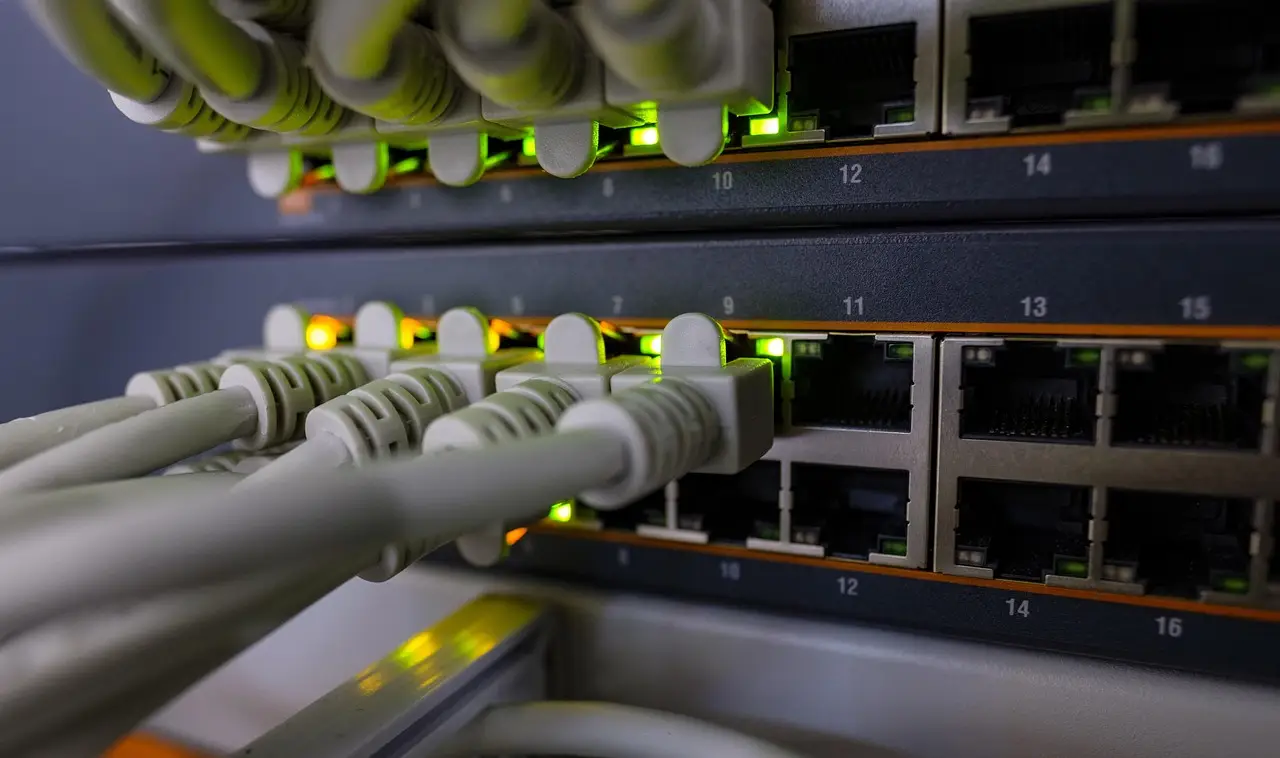
- Researchers planted 2 million digital tripwires across requests to a network of AI services.
- HD Moore placed each secret in exactly one prompt sent to a single provider.
- The canaries included unused AWS keys, empty-account credentials, SSH passwords, URLs, DNS names and private Git repository references.
- The experiment found that highly sensitive data could leak through the AI service supply chain.
- OpenRouter and Vercel were cited as examples of AI routers or gateways, not confirmed failure points.
By Tom Whitfield
Researchers planted 2 million digital tripwires in requests sent through a sprawling network of AI services. Their experiment found that highly sensitive data could leak across the chain “like a sieve.”
The work, led by researcher HD Moore, tested whether information entrusted to AI applications escaped its intended route and how that information got exploited when it did. Moore controlled the infrastructure that received requests using the planted credentials, giving him a way to trace an exposure back through the supply chain.
How do AI routers widen the data path?
Many of today’s AI apps use services such as OpenRouter or Vercel, which can act as brokers. These intermediaries receive large numbers of prompts from application end users, then route each prompt to an available inference engine, or the service that runs the model.
The report calls them “AI routers,” sometimes also known as “AI gateways.” They may select the engine with the lowest price or one best suited to the task. A developer can therefore hire a router to find a model instead of integrating Anthropic, OpenAI, or another large provider directly.
That choice creates a chain the application developer may not control end to end. It also makes the data path more than a direct handoff to one named model company.
What did Moore plant in the prompts?
Moore assembled a collection of never-before-used secrets:
- AWS access keys.
- Functioning credentials tied to empty AWS accounts.
- Passwords for services such as SSH.
- Unique URLs.
- DNS names.
- References to private Git repositories.
Each secret was then seeded into exactly one prompt sent to a single provider. That one-to-one placement gave every marker a defined origin and made attribution possible: if a canary surfaced in the wrong place, Moore could identify each link in the chain responsible.
HD Moore used “canaries” for the markers, a name borrowed from the birds taken into coal mines. The birds served as an early warning, and so did these test secrets. Because none had been used before, any appearance could point to the test rather than an unrelated old leak.
Moore also controlled the destination infrastructure for requests using the credentials. That control allowed him to distinguish the test’s routing path from a coincidence involving credentials already circulating elsewhere.
What is confirmed, and what is not?
The account establishes three core facts:
- The experiment planted 2 million tripwires and found leakage of highly sensitive data through the AI service supply chain.
- OpenRouter and Vercel were cited as examples of brokers; neither was identified as a confirmed failure point.
- The test sought to identify every link that handled a leaked marker.
Several details remain unestablished in the cited account. It provides no provider-by-provider counts, recovery percentage, affected-user tally or specific exploitation method. It also does not state how many of the 2 million planted markers surfaced.
The 2 million planted markers therefore should not be read as 2 million confirmed compromises. The experiment found a leak path, while the supplied figures do not quantify how many canaries appeared outside their intended routes.
The report frames the risk under three headings: security breaches, prompt theft and privacy violations. It also distinguishes the issue from ordinary model behavior. The sensitive values sat inside prompts, and the experiment examined the services moving those prompts.
What does this change for AI app teams?
The practical boundary for data handling is the full route, not just the model provider. A consumer-facing app carries end-user prompts; an internal developer or operations tool may carry AWS keys, SSH passwords and private repository references. The source provides no separate leak rate by vertical or site type.
That makes the router a security and privacy participant rather than a neutral model selector. The operational response follows directly from the test:
- Map every router, gateway and inference provider that can receive a prompt.
- Keep access keys, passwords and private repository references out of prompt text when possible.
- Treat brokers and gateways as parties that handle user data, even when they do not run the final model.
- Exercise each route with controlled canary secrets, as Moore did.
Rather than treating a named model vendor as the entire supply chain, teams need visibility across each broker, gateway and provider involved.
What should teams monitor next?
The unresolved issue is attribution. The canary method can reveal which link handled a leaked secret, but the cited account does not publish a complete map of affected routes or a percentage of markers recovered. The next result to watch is whether follow-up analysis identifies specific brokers, gateways and inference providers in each leak path—and whether the method shows how exposed information was exploited.
via arstechnica.com (Source)
More from Tom Whitfield
Show full bio
News editor covering regulation, policy and their impact on Search rankings and algorithm updates, generative engine optimization at SERP Journal.
184 articles